Some of the most exhausted people in the world aren't working 12-hour shifts, raising five children, or carrying impossible responsibilities. They're lying in bed. They're on vacation.
世界上一些最疲惫的人并不是在倒12小时的班,养育五个孩子,或承担着不可能完成的责任。他们正躺在床上。他们在度假。
They're scrolling through social media. They're doing everything people associate with relaxation. And yet, their minds refuse to switch off. That should immediately tell you something is wrong with the way we think about stress.
他们在刷社交媒体。他们在做所有人们认为能放松的事。然而,他们的大脑却拒绝停止运转。那应该立刻告诉你我们对压力的思考方式出了问题。
Most people assume exhaustion comes from doing too much. In reality, a huge amount of exhaustion comes from carrying things that were never resolved, things that were never said, decisions that were never made, boundaries that were never established, resentments that were never released, conversations that were postponed so many times that they became permanent residents inside the mind.
大多数人认为疲惫源于做得太多。实际上,大量的疲惫来自于背负着那些从未被解决的事情,从未说出口的话,从未做出的决定,从未建立的边界,从未释怀的怨恨,被推迟了太多次的对话,以至于它们成了脑海中的永久居民。
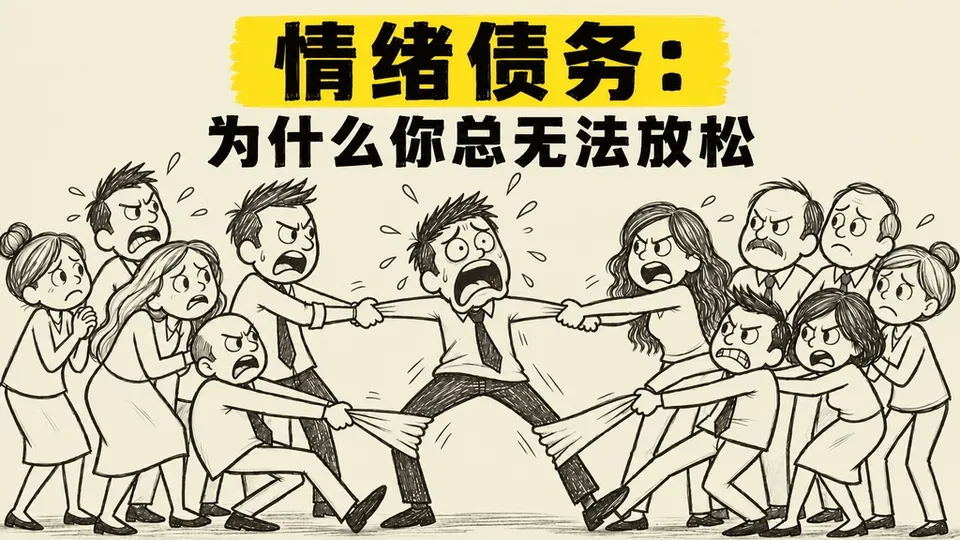
This creates something that can only be described as emotional debt. Just like financial debt, emotional debt doesn't disappear because you ignore it. It accumulates quietly in the background.
这创造了一种只能被描述为情感债务的东西。就像金融债务一样,情感债务不会因为你忽视它而消失。它在背景中悄然累积。
Every uncomfortable conversation you avoid, every time you betray your own needs to keep somebody else comfortable, every situation you know is wrong but continue tolerating anyway.
每一次你回避的不舒服的对话,每一次你为了让他人舒服而背叛自己的需求,每一个你明知是错却依然继续容忍的情况。
Adds another payment to a bill your mind eventually has to collect. The dangerous part is that most people don't realize they're carrying it. They think they're tired because they're busy.
都在给一笔账单增添新的款项,你的内心终将不得不清算。危险之处在于大多数人并未意识到自己正背负着它。他们认为自己累是因为忙碌。
They think they're anxious because life is difficult. They think they need another holiday, another weekend, another distraction, another break from work. Meanwhile, the real problem has nothing to do with their schedule.
他们认为自己焦虑是因为生活艰难。他们认为自己需要另一个假期,另一个周末,另一种消遣,另一次工作之余的休息。与此同时,真正的问题与他们的日程安排无关。
The real problem is that their mind is overloaded with unfinished emotional business. Your brain has a strange obsession with unresolved problems. It does not like loose ends. It does not like uncertainty.
真正的问题是他们的头脑超载了,被未了结的情感事务所占据。你的大脑对未解决的问题有一种奇怪的执念。它不喜欢未了之事。它不喜欢不确定性。
It does not like unanswered questions. When something important remains unresolved, your brain keeps returning to it. whether you're consciously thinking about it or not. This is why people replay arguments months after they happened.
它不喜欢悬而未决的问题。当重要的事情悬而未决时,你的大脑会不断回想到它。无论你是否在有意思考它。这就是为什么人们会在争论发生数月之后仍在脑中重演。
This is why they imagine conversations that never took place. This is why they suddenly remember embarrassing moments from 10 years ago while trying to fall asleep. The brain keeps pulling unfinished files back onto the desk because as far as it's concerned, the work was never completed.
这就是为什么他们会想象从未发生过的对话。这就是为什么他们会突然想起十年前的尴尬时刻,在试图入睡的时候。大脑不断把未完成的文件拉回桌面上,因为对它来说,这项工作从未完成。
Imagine trying to use a computer with 50 browser tabs running at the same time. Even if you're only looking at one tab, every other tab is still consuming memory. That's exactly what emotional debt does.
想象一下,试图在一台同时运行50个浏览器标签页的电脑上工作。即使你只看一个标签页,其他每个标签页仍然在消耗内存。情感债务正是如此。情感债务正是如此。
The ex who hurt you but never apologized. The friendship that should have ended years ago, the career decision you've been avoiding, the resentment you've been pretending doesn't exist.
那个伤害过你却从未道歉的前任。那段早就该结束的友谊,那个你一直回避的职业决定,那份你一直假装不存在的怨恨。
None of those tabs are closed. And because they're still running, they're still draining energy. This is why some people sleep 8 hours and wake up exhausted. Their body rested, but their mind spent the entire night carrying emotional weight.
那些标签页,一个都没有关闭。而且因为它们仍在运行,它们仍在消耗能量。这就是为什么有些人睡了8个小时,醒来却疲惫不堪。他们的身体得到了休息,但他们的思绪却整夜背负着情绪的重担。
Their nervous system never truly relaxed because from its perspective, the threats are still present. Not physical threats, but emotional ones. A toxic relationship is a threat. Constant peopleleasing is a threat.
他们的神经系统从未真正放松过因为从它的角度来看,威胁仍然存在。不是身体上的威胁,而是情感上的威胁。一段有毒的关系就是一种威胁。不断取悦他人是一种威胁。
Unresolved anger is a threat. Living a life that contradicts who you really are is a threat. And your nervous system responds to emotional threats far more seriously than most people realize.
未化解的愤怒是一种威胁。过着与自己真实身份相矛盾的生活是一种威胁。而你的神经系统对情感威胁的反应要严重得多远超大多数人的想象。
This is where many people accidentally trap themselves. They convince themselves they're keeping the peace when they're actually accumulating debt. Every unnecessary yes becomes future resentment.
这正是许多人无意中困住自己的地方。他们说服自己是在维持和睦而实际上他们是在积累债务。每一个不必要的“好”都会变成日后的怨恨。
Every fake smile becomes frustration. Every time they silence themselves to avoid conflict, they create a problem that will eventually demand attention. The irony is that many people spend years trying not to disappoint others while disappointing themselves every single day.
每一个假笑都会变成挫败感。每一次为了避免冲突而让自己沉默,都会制造一个问题,最终会要求得到关注。讽刺的是,许多人花费数年努力不让别人失望,却每天都在让自己失望。
They sacrifice their peace to protect relationships that often aren't even protecting them in return. Then they wonder why they feel constantly tense, constantly irritated, constantly exhausted despite having no obvious reason.
他们牺牲自己的平静去维护关系,而这些关系往往甚至没有反过来保护他们。然后他们纳闷为什么自己总是感到紧张,总是烦躁,总是疲惫不堪,尽管没有明显的原因。
The reason is simple. Their emotional account has been overdrawn for years. And just like financial debt, emotional debt charges interest. The longer a problem remains unresolved, the more expensive it becomes.
原因很简单。他们的情感账户已经透支多年。就像金融债务一样,情感债务也会产生利息。一个问题悬而未决的时间越长,代价就越高。
A conversation that would have been slightly uncomfortable six months ago becomes terrifying today. A small resentment grows into bitterness. A minor boundary violation turns into a pattern of disrespect.
六个月前只会稍感不适的对话,如今会变得令人恐惧。小小的怨恨会滋长成苦毒。一个轻微的边界侵犯会变成一种不尊重的模式。
What could have been solved in 10 minutes eventually becomes something that steals years of peace. This is why avoidance feels so good in the moment and so terrible in the long run.
本可以在10分钟内解决的事情最终会变成偷走你多年安宁的东西。这就是为什么回避在当时感觉如此美好从长远来看却如此糟糕。
Avoidance offers immediate relief while quietly increasing future suffering. It convinces you that you've escaped the problem when you've really just delayed the payment. Many people spend their entire lives managing symptoms instead of eliminating causes.
回避能带来即时的解脱却在悄然增加未来的痛苦。它让你相信你已经逃脱了问题而实际上你只是推迟了付出的代价。许多人终其一生都在管理症状而不是消除根源。
They chase relaxation without addressing what is preventing them from relaxing in the first place. They look for peace while carrying burdens that peace cannot coexist with. Eventually, the body starts sending warnings.
他们追求放松,却没有解决究竟是什么从一开始就阻止他们放松。他们背负着和平无法与之共存的负担,却还在寻找和平。最终,身体开始发出警告。
The mind can lie, but the body usually doesn't. That constant tension in your shoulders, that feeling of heaviness when nothing particularly bad has happened, that exhaustion that sleep never seems to fix.
头脑会说谎,但身体通常不会。你肩膀上持续不断的紧绷感,那种沉重感,当并没有发生什么特别糟糕的事情时,那种睡眠似乎永远无法消除的疲惫。
Sometimes these aren't signs that you need more rest. Sometimes they're signs that you need more honesty. Because at the end of the day, peace isn't created by avoiding reality. Peace is created by confronting reality until there is nothing left to run from.
有时这些并不是你需要更多休息的迹象。有时,它们是提示你需要更多诚实的迹象。因为归根结底,和平并非通过逃避现实而创造。和平是通过直面现实而创造的,直到再无任何可逃避之事。
The people who seem calm aren't always the people with the easiest lives. More often, they're the people who stopped carrying what wasn't theirs to carry. They made the difficult decision.
那些看似平静的人并不总是拥有最轻松生活的人。更常见的是,他们是那些不再背负本不属于自己重担的人。他们做出了艰难的决定。
They had the uncomfortable conversation. They set the boundary. They accepted what they couldn't change and released what they no longer needed. And because of that, they finally gave their minds permission to rest.
他们进行了那场令人不适的对话。他们设定了界限。他们接受了无法改变的事并放下了不再需要的东西。正因如此,他们终于允许自己的大脑休息了。
If you never feel relaxed, no matter how much you sleep, no matter how many breaks you take, and no matter how many distractions you consume, the problem may not be exhaustion at all.
如果你从未感到放松,无论你睡多久,无论你休息多少次,也无论你用多少消遣来分散注意力,问题可能根本不是疲惫。
It may be emotional debt. And until those unpaid bills are dealt with, your mind will keep collecting interest from your peace. Breaking free from emotional debt begins with a simple but uncomfortable truth.
而可能是情感债务。而在那些未付的账单被处理之前,你的心灵会不断从你的平静中收取利息。摆脱情感债务始于一个简单却令人不安的真相。
You cannot heal what you refuse to acknowledge. Most people spend years trying to outrun their emotional debt through distractions, entertainment, work, relationships, or endless busyness.
你无法治愈你拒绝承认的东西。大多数人花费数年试图逃避自己的情感债务通过分心,娱乐、工作、人际关系,或无休止的忙碌。
But emotional debt is like a shadow. The faster you run from it, the faster it follows. The first step is honesty. Identify the conversations you've been avoiding, the resentments you've been carrying, the boundaries you've been afraid to set, and the realities you've been unwilling to face.
但情感债务就像影子。你逃离得越快,它跟随得越快。第一步是诚实。找出你一直回避的对话,你一直怀有的怨恨,你一直害怕设定的界限,以及你一直不愿面对的现实。
Write them down if you have to. Bring them into the light. What remains hidden grows stronger. What is confronted begins to lose its power. The second step is action. Make the phone call.
如果有必要,把它们写下来。将它们带入光明之中。隐藏之物会愈发强大。被直面之物开始失去力量。第二步是行动。打个电话。
Have the conversation. Set the boundary. Make the decision. Even imperfect action creates more peace than years of avoidance. The third step is learning to stop carrying responsibilities that were never yours in the first place.
进行对话。设定界限。做出决定。即使是不完美的行动,也能带来更多安宁胜过多年的逃避。第三步是学会停止承担那些本来就不属于你的责任。
One of the biggest sources of emotional debt comes from trying to manage other people's emotions, expectations, and reactions. You are not responsible for making everyone happy. You are not responsible for fixing every broken person you meet.
情感债务的最大来源之一,就是试图管理他人的情绪、期望和反应。你不需要为让每个人都开心负责。你没有责任去修复你遇到的每一个破碎的人。
And you are certainly not responsible for sacrificing your peace to keep someone else comfortable. The moment you stop carrying burdens that belong to others, life becomes noticeably lighter.
你当然也没有责任牺牲你的平静去让别人感到舒适。当你不再背负属于别人的重担时,生活会明显变得轻松。
Finally, learn to forgive yourself. Many people carry emotional debt not because of what others did to them, but because they cannot stop punishing themselves for mistakes they made years ago.
最后,学会原谅自己。许多人背负着情感债务不是因为他人的所作所为,而是因为他们无法停止惩罚自己为多年前犯下的错误。
They replay old failures, old embarrassments, and old regrets as if suffering long enough will somehow change the past. Real freedom arrives when your mind no longer has unfinished business keeping it awake at night.
他们不断回放过去的失败、过去的尴尬和过去的遗憾,仿佛痛苦足够久就能改变过去。真正的自由到来当你的内心不再有未了之事让你夜不能寐。
And when that day comes, you'll discover something profound. Peace was never something you had to find. It was something you had to stop owing away. The comment of the day goes to a user called Zodia OP and it reads, "I wish schools taught social skills like this facts.
当那一天到来时,你会发现一些深刻的东西。平静从来都不是你必须去寻找的东西。这是你必须停止逃避的东西。今日最佳评论来自一位名叫Zodia OP的用户内容是,“我希望学校能像这样教授社交技能。
It would have saved a lot of us at years of unnecessary lessons.
这能拯救我们很多人免于多年不必要的教训。