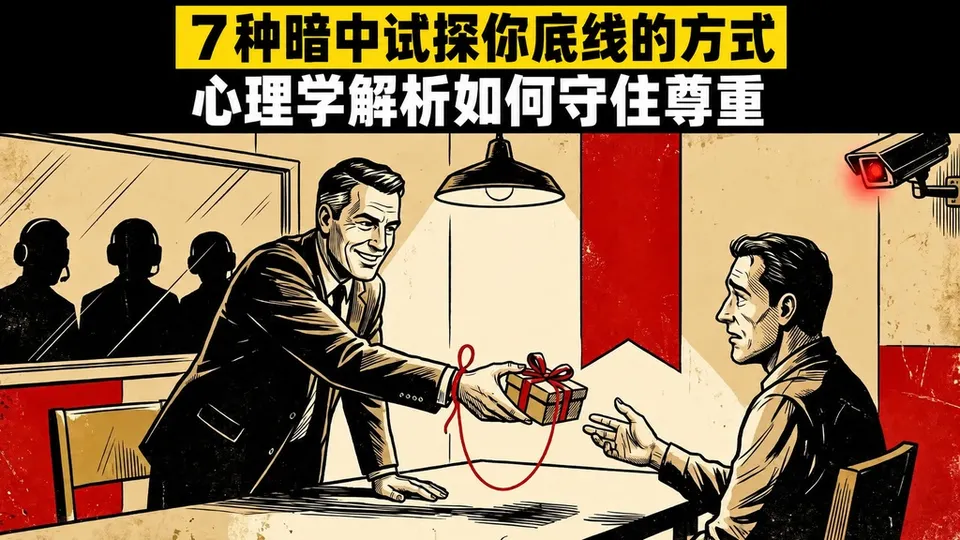
Somewhere there is a price list with your name on it. You've never seen it. You didn't write it. But everyone who spends real time around you owns a copy. Your boss, your friends, the person sleeping next to you.
在某个地方,有一份价目表上写着你的名字。你从未见过它。不是你写的。但每个真正花时间与你相处的人都持有一份副本。你的老板、你的朋友、睡在你身边的人。
And they consult it quietly before they touch anything that's yours. Because your boundaries are not what you say. They are not even what you feel. They are the sum of what you have charged people for crossing them.
他们会悄悄查阅它在他们触碰任何属于你的东西之前。因为你的边界不是你说的话。甚至不是你的感受。它们是你向人们收取的跨越边界的代价总和。
And that number wasn't guessed. It was calculated through seven small experiments that ran in the opening weeks of every relationship you have. Six of them you failed without ever knowing you were being examined.
而这个数字并非凭空猜测。它是通过七个小实验计算得出的这些实验在你每一段关系的开局几周内进行。其中六项你都未能通过而你从未察觉自己正被审视。
The seventh is the only one that truly matters. And once you can see it, you'll understand why certain people stopped being careful with you on a specific day you can almost name. In 1513, Nicolo Machaveli was dragged out of his life.
第七个才是唯一真正重要的。一旦你能看清它,你就会明白为什么某些人不再对你小心翼翼就在某个你几乎能说出名字的特定日子。1513年,尼科洛·马基雅维利被拖出了他的生活。
Florence's new regime accused him of conspiracy, locked him in a cell, and tortured him with the rope, arms bound behind the back, hoisted, dropped six times. He confessed to nothing, walked out broken and unemployed, and retreated to a farmhouse where he wrote the most honest book about power ever put on paper.
佛罗伦萨的新政权指控他参与阴谋,将他关进牢房,用绳索对他施以酷刑,双臂反绑背后,吊起,落下六次。他什么也没招供,身心俱碎、失业地走了出来,隐居到一间农舍,在那里写下了关于权力最诚实的书,前所未有。
And buried in chapter 19 of The Prince is a distinction almost everyone misses. Machaveli says a ruler must avoid two fates, being hated and being despised. And then he does something strange.
而在《君主论》第19章中埋藏着一个几乎所有人都忽略的区别。马基雅维利说,统治者必须避免两种命运,被人憎恨和被人蔑视。然后他做了一件奇怪的事。
He treats them as completely different diseases. Hatred, he suggests a strong ruler can survive because hatred is expensive for your enemies. To act on hate, they must organize, conspire, risk their necks.
他将它们视为完全不同的疾病。他提出,一个强大的统治者能够在仇恨中生存下来因为仇恨对你的敌人来说是代价高昂的。要基于仇恨采取行动,他们必须组织起来、密谋策划、冒生命危险。
Hatred still does math. Contempt is different. Contempt is free. It arrives, he wrote, when a ruler is seen as changeable, frivolous, cowardly, irresolute. And once it arrives, people stop calculating before they move against you.
仇恨依然会算计。蔑视则不同。蔑视是免费的。它就会到来,他写道,当统治者被视为反复无常,轻浮、懦弱、优柔寡断时。而一旦它到来,人们就不再在对你采取行动前盘算。
They just move. Not because they decided to disrespect you, because they discovered they could. That word discovered is the entire secret. Nobody wakes up and chooses to walk over you.
他们直接行动。不是因为他们决定不尊重你,而是因为他们发现他们可以这样做。“发现”这个词就是全部的秘密。没有人会一觉醒来就选择践踏你。
They find out it's walkable. And finding out requires data. real data. Not your words, not your posture, not the confident things you say about yourself. Those are advertising. What they need are results.
他们发现这是可以步行的。而发现这一点需要数据。真实的数据。不是你的言辞,不是你的姿态,也不是你对自己那些自信的描述。那些都是自我宣传。他们需要的是结果。
So they run experiments, small, cheap, completely deniable. Each one designed to cost them nothing if you catch it and teach them everything if you don't. There are seven. They tend to run in a particular order, starting with what you have and ending with what you are.
所以他们进行实验,规模小、成本低、完全可否认。每一个都设计得让他们毫无损失如果你发现了,就等于教会了他们一切如果你没发现。有七个。它们往往按特定顺序排列,从你拥有什么开始,到你是什么结束。
Quick pause. If you're someone who re-watches these videos, who pauses, goes back, thinks about them after, the membership was built for you. On Patreon, you get membersonly videos that go further than the public ones, audio versions for when you're driving or training, and the full written scripts to study line by line.
稍作停顿。如果你是那种会重看这些视频的人,会暂停、回看,之后还会思考它们,会员资格就是为你打造的。在Patreon上,你可以获得会员专属视频内容比公开视频更深入,还有适合开车或训练时收听的音频版本,以及可供逐行学习的完整文字稿。
It's $4.99 a month. Click the link in the description and join me on Patreon. Back to the video. Test one, the discounted no. It starts with an ask you were always going to refuse.
每月只需4.99美元。点击简介中的链接,在Patreon上加入我吧。回到视频。测试一,打折的不。它始于一个你一直都会拒绝的请求。
A colleague wants you to cover their entire weekend. A friend wants to borrow an amount of money that makes your stomach tighten. Someone wants you at an event you'd crawl through glass to avoid.
同事想让你替他们整个周末的班。朋友想借一笔钱,一笔让你胃都揪紧的钱。有人想让你参加一个活动,一个你宁愿爬过碎玻璃也要躲开的活动。
You say no, and you feel that small flush of pride because you held a line. Then comes the second sentence. Softer, reasonable. Okay. Okay, could you at least take Saturday morning?
你说不,你感到一丝小小的自豪,因为你守住了底线。接着来了第二句话。更温和,更合理。好的。好吧,你能不能至少周六早上来?
And the yes falls out of you before you finished hearing the question. In 1975, psychologist Robert Sealdini and his team at Arizona State ran an experiment on exactly this reflex.
然后那个“是”就从你嘴里脱口而出在你还没听完问题之前。1975年,心理学家罗伯特·西奥迪尼和他亚利桑那州立大学的团队针对这种反射做了一项实验。
Researchers stopped students on campus and asked for something absurd. Would you volunteer 2 hours a week for two full years as an unpaid counselor to juvenile delinquents? Nearly everyone said no. Then came the retreat.
研究人员在校园里拦住学生,并提出了一个荒谬的请求。你愿意每周志愿服务2小时,持续整整两年,作为无薪辅导员帮助少年犯吗?几乎所有人都拒绝了。随后便是退却。
Fine. Would you chaperone a group of those kids on a single 2-hour trip to the zoo? Half said yes. When a different group of students was asked only the zoo question, cold with no giant request first, fewer than one in five agreed.
好吧。你愿意陪同那群孩子参加一次两小时的行程去动物园吗?一半人同意了。当另一组学生只被问到动物园的问题时,直接提出小要求,没有先提出大要求,同意的人不到五分之一。
The rejected monster asked nearly tripled compliance with the small one. The mechanism is reciprocal concession. Their retreat registers in your nervous system as a gift. And your wiring demands you match it.
被拒绝的大要求让对小要求的遵从率几乎增加了两倍。其机制是互惠让步。他们的退让在你的神经系统中被登记为一份礼物。而你的神经回路要求你予以回应。
Your yes doesn't feel like surrender. It feels like fairness. Now understand what's actually being measured when someone runs this on you deliberately. They are not testing whether you'll do the small thing.
你的同意不像是屈服。它感觉像是公平。现在要明白实际被衡量的是什么当有人故意对你这样做时。他们不是在测试你是否会做这件小事。
They're testing whether your no is a wall or an opening bid. Because if the shrunken request works, they've learned a formula they will use on you for years. Inflate, retreat, collect.
他们是在测试你的拒绝是一堵墙还是一个可以讨价还价的开价。因为如果缩小的请求奏效了,他们就掌握了一个会在你身上用很多年的公式。虚张声势、退让、收集。
Every future ask will arrive prepadded, the way a rug merchant prices for the haggle, and you'll spend the relationship feeling like you keep winning negotiations you were never actually in.
未来每一次请求都会预先加码,就像地毯商给讨价还价留出的报价空间,而你会在这段关系中耗费精力,感觉自己一直在赢得谈判,而你其实从未真正参与其中。
The counter is one act of mental hygiene. Evaluate the second ask as if the first never existed. If someone walked up to you cold and asked for Saturday morning, would you want to give it?
应对之法,就是一次心理上的清理。就当第一个请求从未存在过,评估第二个请求。如果有人突然走到你面前向你索要周六上午,你会愿意给吗?
Then give it freely as a choice. If not, the sentence is simple. That's still a no. Your relief was the instrument. Take it off the table, and the test returns nothing. They've priced your refusal.
那就把它当作一种选择,心甘情愿地给出去。如果不是,这个句子就很简单。那仍然不行。你的宽慰才是关键。把它从桌上拿开,测试就什么也测不到了。他们已经给你的拒绝标好了价码。
The next experiment prices something you defend far less carefully, your gratitude. Test two, the planted debt. New York City, early 1900s. If your tenement burned down at 3:00 in the morning, the fire engines came fast.
下一个实验针对的是你防备远没有那么严密的东西,你的感激。测试二,被植入的债务。纽约市,20世纪初。如果你的公寓在凌晨3点被烧毁,消防车很快就来了。
But there was often a man there just as fast, sometimes faster. He found your family a room for the night. Clothes, coal in winter, a job by Thursday, bail for your cousin, a turkey at Christmas.
但往往有个人也来得一样快,有时甚至更快。他给你家找了个过夜的地方。衣服、冬天的煤,周四前找到工作,保释你表弟,圣诞节的火鸡。
He asked for nothing. His name was George Washington Plunkett, ward boss of the Tam Hall political machine, and he later explained his method with disarming honesty in a series of talks a journalist wrote down.
他什么也没要求。他的名字叫乔治·华盛顿·普伦基特,是坦慕尼协会政治机器的选区头目,后来他以令人卸下防备的坦诚解释了自己的方法在一名记者记录下的一系列谈话中。
He didn't buy votes. Buying is crude. A bought man knows he was bought. Plunkett planted debts. Every favor was a quiet filing in a ledger no one signed. And on election day the invoices went out, not as demands, as feelings.
他不买选票。收买太粗俗了。一个被收买的人知道自己是被收买的。普伦基特四处埋下债务。每一份人情都悄然记入一本无人签名的账簿。选举日当天,账单寄了出去,不是作为索求,而是作为一种感觉。
That warm, itching sense of owing. Plunkett died a wealthy, powerful man, and he almost never had to threaten anyone. The debt did the collecting. 60 years later, a psychologist named Dennis Regan proved in a lab how little that debt costs to plant.
那种温暖又令人心痒的亏欠感。普兰基特去世时是个富有、有权势的人,而他几乎从不需要威胁任何人。债务自己会来讨要。60年后,一位名叫丹尼斯·里根的心理学家在实验室里证明种下这笔债务的代价有多小。
In his 1971 experiment, a subject rated paintings alongside a stranger, secretly a Confederate named Joe. During a break, Joe left and came back with two bottles of Coke, one for himself, one for the subject, unasked, a dime's worth of soda.
在他1971年的实验中,一名受试者与一个陌生人一起给画作评分,那陌生人其实是同伙,名叫乔。休息期间,乔离开后带着两瓶可乐回来了,一瓶给自己,一瓶给受试者,没等对方开口,就递上了一毛钱的汽水。
Later, Joe mentioned he was selling raffle tickets, a quarter each, and asked if the subject wanted any. The people who'd received the coke bought roughly twice as many tickets as the people who hadn't, but the finding that should raise the hair on your arms is this one.
后来,乔提到他正在卖抽奖券,两毛五一张,并问受试者要不要买几张。收到可乐的人购买的彩票数量大约是没有收到的人的两倍,但真正会让你毛骨悚然的发现是这个。
It barely mattered whether they liked Joe. Subjects who found him unpleasant still paid the debt. The favor overrode the feeling, which means unsolicited generosity is one of the most precise probes ever pointed at a human being.
他们是否喜欢乔几乎无关紧要。觉得他不讨喜的受试者仍然偿还了这笔债。恩惠压过了感觉,这意味着不请自来的慷慨是最精准的探针之一曾经指向人类。
When someone insists on covering your bill, does uninvited work on your project, hands you a gift slightly too large for the occasion, a certain kind of person is watching one thing only.
当有人坚持要为你买单,不请自来地为你的项目工作,递给你一份对于场合来说稍显贵重的礼物,某种人只盯着一样东西。
Do you register the string or just the warmth? Do you mention repaying it? Do you accept a little too smoothly? Every easy acceptance tells them your ledger is unguarded and an unguarded ledger can be loaded.
你察觉到的是那根弦还是仅仅是那份温暖?你提过要还吗?你是不是接受得太爽快了?每一次轻易接受,都在告诉他们你的账本无人看守而一本无人看守的账本,是可以被随意加载的。
The counter is not suspicion of all generosity. Most generosity is just generosity. The counter is bookkeeping. Accept, thank and close the balance fast and visibly so nothing acrru. Decline the gift that's out of scale. And when a favor from months ago suddenly gets called in at a price that doesn't match, drag the exchange into the open air. Is this about the dinner you covered?
柜台并不怀疑所有的慷慨。大多数慷慨只是慷慨。柜台是记账。接受、致谢并迅速结清人情账而且要让所有人都看得见,不留任何亏欠拒绝超出合理范围的馈赠而当数月前的人情突然被要求偿还代价却与当初并不相称就把这笔交易摆到明面上来这是关于你顶替的那顿晚餐吗?
Tell me what you think I owe. A debt named out loud stops earning interest. Plunkett's whole empire ran on nobody ever saying the numbers. Favors and refusals are still external, though things that orbit you.
告诉我你觉得我欠你什么。说出来的债就不再产生利息。普朗基特的整个帝国靠的是从来没人说出那些数字。人情和拒绝仍然是外在的,尽管那些东西围绕着你。
The third test walks closer. It touches what's yours. Test three, the borrowed inch. In 1966 at the University of California, Davis, psychologist Robert Summer, and a researcher named Nancy Filipe did something socially unforgivable in the name of science.
第三项测试走得更近了。它触及属于你的东西。测试三,借来的一英寸。1966年,在加利福尼亚大学,戴维斯分校,心理学家罗伯特·萨默,和一位名叫南希·菲利普的研究员做了一件在社会上不可原谅的事以科学的名义。
They went into the university library, a quiet room mostly empty, plenty of open tables, and targeted women studying alone. The researcher would walk past all that open space and sit directly beside her subject, about a foot away.
他们走进大学图书馆,一个安静的房间,几乎空无一人,有很多空桌子,专门锁定独自学习的女性。研究者会走过所有那些空位,直接坐到她的研究对象旁边,大约一英尺远。
Sometimes she'd slide the chair even closer. She never spoke. She just occupied. Within 30 minutes, roughly 70% of the invaded women had fled the room. Among undisturbed controls, about 1 in 10 left.
有时她还会把椅子挪得更近。她从不说话。她只是占据着空间。在30分钟内,大约70%被侵犯的女性已经逃离了房间。在未受干扰的对照组中,约有十分之一离开。
But the detail that matters most isn't who ran. It's what happened before they ran. Almost nobody said a word. They built barricades instead. Stacked books, repositioned bags, angled their shoulders like a closing door.
但最重要的细节并不是谁逃跑了。而是他们逃跑之前发生了什么。几乎没有人说话。他们反而筑起了路障。堆起书本,挪动背包,侧过肩膀,像一扇正在关上的门。
Silent architecture. And when the barricades failed, they didn't defend the territory. They abandoned it. Now shrink that library down and scatter it across your week. Your pen that migrates to someone's desk and never returns.
无声的建筑。而当路障失效时,他们并未保卫领土。他们放弃了它。现在,把那个书库缩小,分散到你一周的时间里。你的笔迁移到别人的桌上,再也没回来。
Your usual chair occupied and not offered back. Your Saturday planned by someone else before you were asked. A nickname you never approved, minted and circulated. Your phone picked up off the table and scrolled.
你常坐的椅子被占了,也没让回来。你的周六在征求你意见之前就被别人安排好了。一个你从未认可过的绰号,被凭空捏造并传播开来。你的手机被人从桌上拿起并翻看。
Each one is a chair sliding one foot closer. And each one is calibrated to stakes so low that objecting feels deranged. That's not an accident. It's the design. Trivial stakes give the intruder perfect cover, and they give your silence perfect meaning.
每一次都像椅子向前滑动一英尺。而每一次都被校准到低得让人反对都显得疯癫。这绝非偶然。这就是设计。微不足道的利害关系为入侵者提供了完美的掩护,也让你的沉默有了完美的意义。
Because people don't read your reaction to small intrusions as a reaction to small intrusions. They read it as your policy. The person who watches you barricade and relocate instead of speaking has learned something worth more than your pen.
因为人们不会把你的反应解读为对微小侵犯的反应作为对微小侵犯的反应。他们将其解读为你的政策。看着你筑起壁垒并转移阵地而非发声的人学到了一些更有价值的东西胜过你的笔。
Faced with intrusion, this one reorganizes their own life around it. So the counter is the thing 70% of summer subjects couldn't do. One sentence, no heat, delivered like a weather report.
面对侵扰,这个人会围绕它重新安排自己的生活。所以这个柜台是70%的暑期实验对象都做不到的事情。一句话,不带情绪,像播报天气一样说出来。
That's my chair. Ask me before you take that. It will cost you 3 seconds of social static. Those 3 seconds are the tuition. The alternative is the barricade life. A decade of stacked books and angled shoulders, quietly moving tables in your own house.
那是我的椅子。拿走之前先问我。这会耗费你3秒的社交杂音。那3秒就是学费。另一种选择是路障生活。十年的堆积书籍和倾斜的肩膀,在自己家里悄悄搬动桌子。
Stop here for a moment because the ground is about to shift. The first three tests priced things you have. Your refusal, your gratitude, your territory. Fail them and you lose resources.
在这里暂停片刻,因为地面即将变动。前三个测试评估你拥有的东西。你的拒绝,你的感激,你的领地。失败了就会失去资源。
annoying, recoverable. The four tests remaining are different instruments entirely. They don't measure what you have. They measure who you are. And the people who run them stop being casual because the results here are worth owning.
烦人,但可恢复。剩下的四项测试完全是不同的工具。它们衡量的不是你所拥有的。它们衡量你是谁。而运营它们的人不再随意因为这里的结果值得拥有。
Test four, the audience trap. Louis the 14th spent his childhood learning exactly how fragile a king can be. He was 10 when the fond broke over France. nobles and armed mobs at open war with the crown and the royal family fled Paris at night like fugitives.
测试四,观众陷阱。路易十四的童年让他深刻体会到国王可以多么脆弱。法国投石党运动爆发时,他才10岁。贵族和武装暴民与王室公开交战,王室一家像逃犯一样连夜逃离巴黎。
Two years later, a crowd forced its way into his palace and pushed to his bed chamber to make sure the boy king hadn't run again. He lay in his bed and pretended to sleep while strangers filed past inspecting him.
两年后,一群人强行闯入他的宫殿并推进到他的卧室以确保这位少年国王没有再逃跑。他躺在床上假装睡觉而陌生人鱼贯而过,审视着他。
He never forgave it, and his revenge took the strangest shape in political history. not executions, etiquette. At Versailles, he built a machine that ran on witnessed obedience. Every morning came the lever, the ritual of the king's rising, where the most powerful men in France competed bitterly for microscopic honors, who hands the king his shirt, who holds the candlestick.
他从未原谅这件事,而他的复仇呈现出最奇特的形式在政治历史上。不是处决,而是礼仪。在凡尔赛,他建造了一台机器靠被见证的服从运转。每天早晨,杠杆落下,国王起床的仪式,法国最有权势的人为微不足道的荣誉激烈争夺,谁把衬衫递给国王,谁举着烛台。
Dukes whose grandfathers had raised private armies against the throne now measured their entire worth in inches of proximity to royal laundry. The sociologist Norbert Elias who studied this court for years called it domestication and he saw the gears clearly.
那些公爵的祖父曾召集私人军队对抗王权如今他们衡量自己的全部价值只凭与王室衣物近在咫尺的距离社会学家诺贝特·埃利亚斯多年研究这个宫廷,称之为驯化,他清楚地看到了其中的机制。
A man who performs small obedances in front of other men is rewiring himself. The muscle for large defiance atrophies through witnessed compliance in trivial things. And every noble's tiny public surrender taught the watching room what surrender looked like until obedience wasn't a choice anyone remembered making.
一个在其他男人面前执行微小服从行为的人正在重塑自己。用来进行大规模反抗的肌肉在众目睽睽之下的顺从中萎缩于琐碎之事中。而每一位贵族微小的公开屈服都教会了旁观的众人屈服是什么样子直到服从不再是一个有人记得自己做出过的选择。
It was the heir. You've stood in a modern version of that bed chamber. It sounds like this. Grab us some coffees. Yeah. In front of the team. Take notes for this one. In front of the client.
是继承人。你曾站在那个卧室的现代版本中。听起来是这样的。给我们拿几杯咖啡。是的。在团队面前。把这次记下来。在客户面前。
Scooch down. Let him sit there in front of the table alone with the person. Each request is nothing. The audience is the entire experiment because refusing in front of witnesses costs social smoothness.
往下挪一挪。让他一个人坐在桌子前面,和那个人在一起。每个请求都微不足道。观众就是整个实验因为在证人面前拒绝会损害社交和谐。
And the tester is betting you will pay any price to keep a room smooth. What's being measured is brutally specific. Do witnesses disable your no. Fail once and two things happen at the same moment.
而测试者赌你会付出任何代价来维持场面的和谐。被衡量的事物极其具体。证人是否废除了你的否决权?失败一次两件事会同时发生。
You become the room's designated fetcher and everyone watching learns the price of commanding you exactly the way Versailles taught its lessons publicly in miniature forever. The counter is not defiance.
你成了房间里指定的跑腿人每个看着的人都知道了代价那就是精确地指挥你就像凡尔赛宫传授其教训的方式公开地、以微缩形式,永远如此。反击不是反抗。
Defiance in front of an audience makes you the incident. The counter is friction. A full 3-second pause before you respond, held eye contact, unhurried, letting the request sit in the open where everyone can hear its shape.
在观众面前反抗,你就会成为事件本身。反击是摩擦。回应前完整停顿3秒,保持目光接触,不慌不忙,让请求公开停留让每个人都能听清它的轮廓。
Then either a yes that is visibly a choice or a redirect delivered with genuine pleasantness. Machines right behind you. Grab me one too while you're up. What the room records? This one doesn't jump.
然后要么给出一个明显是选择的肯定答复要么以真诚的愉悦予以转引。机器就在你身后。你起来的时候也帮我拿一个。房间记录了什么?这个不会跳。
And the test almost never runs twice because the audience was supposed to be their weapon. You just turned it into a jewelry. The crudder instruments are behind you now. What comes next is elegant.
而且这个测试几乎从不运行两次因为观众本应是他们的武器。你却把它变成了珠宝。粗鲁的乐器现在在你身后。接下来的一切都很优雅。
The test that arrives dressed as a gift. Test five, the flattering cage. In 1963, two sociologists, Eugene Weinstein and Paul Deutschberger, published a paper describing a manipulation so quiet it barely looks like one.
以礼物之姿降临的考验。第五项考验,华美的牢笼。1963年,两位社会学家,尤金·温斯坦和保罗·多伊奇伯格,发表了一篇论文,描述了一种操纵手段,如此隐蔽,几乎看不出是操纵。
They called it altercasting. And the idea is this. You don't persuade a person to do what you want. You cast them as the kind of person who does it and then their own identity does the pushing for you.
他们称之为“身份赋予”。其理念是这样的。你不会说服一个人去做你想让他做的事。你把他塑造成那种会去做这件事的人,然后他自己的身份认同就会替你推动这件事。
Diplomats use it on nations. Advertisers use it on millions. But its natural habitat is one sentence long and it lives in your relationships right now. You're the only one I can actually count on.
外交官对国家使用这一手段。广告商在数百万人身上使用它。但它的自然栖息地只有一句话那么长而且它就存在于你当下的各种关系中。你是我唯一真正能依靠的人。
You're so chill. You're not one of those people who makes everything a big deal. You're not the jealous type. That's what I love about you. Feel the warmth of those sentences. Now look at the fine print because every one of them is a compliment with an invoice stapled to the back.
你真冷静。你不是那种小题大做的人。你不是爱吃醋的那种人。这就是我喜欢你的地方。感受那些话语的温暖。现在看看细则。因为它们每一句都是赞美。背面还钉着一张账单。
The reliable one can't refuse. The chill one can't object. The not jealous type can't ask the question sitting in his throat. Accepting the identity means signing the waiver. And this is what makes altering the cheapest test ever devised.
可靠的那个无法拒绝。冷静的那个无法反对。不嫉妒的那个无法问出这个问题卡在他的喉咙里。接受这个身份就意味着签署弃权书。而这正是让改变成为有史以来成本最低的测试的原因。
A favor costs money. A public command risks push back. This costs one flattering sentence. And here is the ugly genius of it. You will defend the arrangement afterward for free. Because objecting now means demoting yourself from a self-image you enjoyed wearing.
帮忙是要花钱的。公开下令可能会遭到抵制。这代价只是一句恭维话。而这正是它丑陋的天才之处。事后你会无偿为这个安排辩护。因为现在反对就意味着自我降级从你曾享受披上的自我形象中降级。
What's being measured is whether your boundaries can be purchased with identity. Whether the fence comes down if the intruder simply tells you that fenceless is what makes you special.
被衡量的是你的底线能否用身份收买。围栏是否会倒下如果入侵者直接告诉你没有围栏才是让你与众不同的地方。
There's a tell. And once you spot it, you can't stop spotting it. The compliments never arrive on neutral ground. They arrive fused to a request or half a second before your objection was due.
有一个破绽。一旦你发现了它,就再也无法停止发现它。赞美从不凭空而来。它们总是与某个请求绑在一起,或者在你本该提出异议前半秒钟时降临。
Praise deployed as prepayment. The counter is a surgical separation. Keep the trait. Refuse the terms. I am easygoing. This still doesn't work for me. I'm glad you can count on me.
赞美被用作预付款。计数器是一种外科手术式的分离。保留该特征。拒绝这些条件。我很随和。这对我来说还是行不通。很高兴你能依靠我。
I can't do this one. You're not rejecting the compliment. You're rejecting the cage soldered to it. And a person who can be praised without being steered is nearly impossible to alter.
这一个我做不到。你不是在拒绝赞美。你是在拒绝焊在它上面的笼子。而一个受到赞美却不会被左右的人几乎是无法被改变的。
The flattery just bounces off and it comes back to the sender with a receipt. These five tests share a birthday. They run early while you're still being mapped. The last two are different animals.
奉承话只会被弹开然后带着回执返回到发送者那里。这五项测试同一天诞生。它们在你仍被映射时就已经运行了。最后两个是不同的动物。
They run in the middle of relationships after someone believes the map is finished. Test six, the expired boundary. You stated it once, clearly, calmly. Maybe it even went well. They nodded.
它们在关系的中途运行在某人相信地图已完成之后。测试六,过期边界。你说过一次,清晰,冷静。也许甚至进展顺利。他们点了点头。
They agreed. The thing you asked them never to do stopped happening. Months pass. And then softly, they forget. You said your salary isn't dinner conversation. It surfaces at dinner, framed as innocent curiosity.
他们同意了。你要求他们绝不要做的事不再发生了。几个月过去了。然后,他们渐渐淡忘。你说过你的薪水不适合在晚餐时谈论。它在晚餐时浮现,伪装成天真的好奇。
You asked them never to comment on what you eat. A small remark slips out, feather light. You told them certain topics stay between you two. One appears casually in front of others.
你曾要求他们永远不要评论你吃什么。一句轻飘飘的话不经意间溜了出来。你告诉过他们某些话题只限于你们两人之间。一个话题不经意地出现在其他人面前。
And it's all packaged as a lapse of memory, which is precisely what makes it a test because what's being measured is the half-life of your rules. Do your boundaries stand on their own?
而这一切都被包装成一次记忆的疏漏,而这恰恰正是它成为一次考验的原因,因为被衡量的是你那些规则的半衰期。你的界限能独立成立吗?
Or do they expire unless you keep rearguing them? The mechanism is one of the oldest in behavioral science. Extinction. Any rule that stops being reinforced decays. That's just how learning works in pigeons and in people.
还是说除非你不断重新争辩,它们就会失效?这一机制是行为科学中最古老的机制之一。灭绝。任何不再被强化的规则都会消退。鸽子和人类的学习方式就是如此。
A tester simply accelerates the decay on purpose and watches whether you repost the fence. And there's a second blade hidden inside this one. Each time you do restate the rule, they make it cost slightly more.
测试者只是故意加速衰变并观察你是否会重新发布围栏。而这把刀里面还藏着第二把刀片。每当你重述规则时,他们就会让代价稍微更高一点。
A sigh, a wounded look. You're still on that. Slowly, you're taught that maintaining your own boundary is nagging. That the rule is a burden you keep imposing on the relationship. Most people don't abandon their limits because they changed their minds.
一声叹息,一个受伤的眼神。你还在纠结那件事。慢慢地,你被教导,守住自己的边界就是唠叨。那条规则是一种负担你不断强加于这段关系。大多数人放弃自己的底线并非因为他们改变了想法。
They abandoned them because restating started to feel petty. And the tester was the one who set the pettiness pricing. Listen to that again. A boundary that can simply be waited out was never a boundary.
他们放弃是因为重新申明开始让人觉得小家子气。而那个测试者就是设定小气定价的人。再听一遍。一个只需等待就能突破的边界,从来就不是真正的边界。
It was a mood. And everyone around you knows the difference even if you don't. The counter has two parts. First, restate once flat in the same words you used originally. We covered this.
那是一种情绪。你周围的每个人都知道这种区别,即使你自己不知道。柜台有两个部分。首先,用你原来用过的同样的话,平铺直叙地复述一遍。这个我们讨论过了。
It hasn't changed. The identical wording matters more than you'd think. New phrasing sounds like a fresh negotiation, and a negotiation is exactly the door they're checking. Second, if it lapses again, don't escalate the argument.
它没有变。一模一样的措辞比你想象的更重要。新的说法听起来像是一场全新的谈判,而谈判正是他们在试探的那扇门。第二,如果它再次失效,不要升级争论。
Change the access. Less information, less time, fewer of the privileges the rule protected, not announced as punishment, just adjusted because boundaries don't expire. Enforcement does.
改变访问权限。信息更少,时间更短,规则所保护的特权更少,不宣布为惩罚,只是调整,因为界限不会过期。执行才会。
And enforcement is the only part that was ever yours to control. Everything to this point, all six experiments, has mapped the fence, where it runs, how it's built, what bribes open the gate.
而执行是唯一一直由你掌控的部分。到目前为止的一切,所有六次实验,已经绘制出了围栏,它在哪里延伸,它是如何建造的,什么贿赂能打开大门。
The final test asks a colder question, the one the entire survey was funding. What happens after the fence is breached? Test seven, the free reset. One day they cross you. Not a nudge, not an accident, a real line crossed with their eyes open.
最后的测试提出了一个更冷酷的问题,整个调查一直在资助的那个问题。围栏被突破后会发生什么?测试七,免费重置。总有一天他们会背叛你。不是轻轻一推,不是意外,而是睁着眼睛真正越过了底线。
And then they apologize beautifully, fast, warm, specific, complete. Everything an apology is supposed to be. And your relief is enormous. And you forgive. And by Friday, the warmth is back and the whole thing feels like proof the relationship is strong.
然后他们道歉得无懈可击,迅速、温暖、具体,完整。道歉该有的样子,一样不缺。而你的宽慰是巨大的。而你原谅了。而到了周五,温暖又回来了整件事感觉就像证明这段关系很牢固。
The apology was the test. An economist named Benjamin Hoe has spent his career studying apologies as economic signals, including work with economist Ela Louu on medical malpractice, examining US states that passed laws letting doctors say, "I'm sorry," without the words being used against them in court.
道歉就是考验。一位名叫本杰明·霍的经济学家整个职业生涯都在研究道歉作为一种经济信号,包括与经济学家埃拉·卢合作研究医疗事故,考察美国那些通过法律、允许医生说“我很抱歉”,而这句话不会在法庭上被用来针对他们的州。
Disputes in that research resolved faster. Apology, it turns out, is a functioning currency. But Ho's deeper finding cuts against everything we teach children. An apology reliably predicts changed behavior only when it costs the apologizer something, money, status, an admission that leaves them exposed.
那项研究中的纠纷解决得更快。事实证明,道歉是一种有效的货币。但何的更深层发现却与我们教给孩子的一切相悖。只有当道歉让道歉者付出代价时,它才能可靠地预测行为的改变,金钱、地位,或一个让他们暴露弱点的承认。
A costless apology is what game theorists call cheap talk. It doesn't signal remorse. It signals fluency. So when someone crosses a real line and pays you entirely in words, watch what they're watching.
无需付出代价的道歉,正是博弈论者所说的空谈。它并不表示悔意。它表示的是熟练。所以当有人真正越界时却只用言语来补偿你,看看他们在关注什么。
The only number that determines whether any boundary of yours means anything at all. the durable cost of crossing you. If a well-performed apology resets everything to zero, same access, same trust, same warmth by the weekend.
唯一能决定你的任何底线是否有丝毫意义的数字。就是冒犯你所付出的持久代价。如果一次表现良好的道歉就能让一切归零,同样的权限,同样的信任,到周末就恢复同样的温情。
They haven't found a hole in one fence. They've found the skeleton key to every fence you own. Why would anyone respect a line whose crossing costs three sentences of remorse and a sincere face?
他们不是在某道篱笆上找到了一个洞。他们找到了能打开你所有篱笆的万能钥匙。为什么会有人尊重一条越界只需付出三句悔恨之言和一副真诚面孔代价的界线?
Makaveli put the principle in the coldest possible terms. People will injure you wherever injuring you is safe and they hesitate only before those from whom the injury will carry a price.
马卡维利用最冷酷的措辞阐述了这一原则。人们会在伤害你安全无虞的地方伤害你他们只在那些人面前犹豫——那些会让伤害付出代价的人。
He was describing states it is truer of you. And notice what this does to the six tests behind it. The discounted no, the planted debt, the borrowed inch, the audience trap, the flattering cage, the expired rule, reconnaissance, sketches of the perimeter.
他描述的状态更符合你。注意这对背后六项测试的影响。打折扣的不,被植入的债务,借来的一寸,观众陷阱,奉承的牢笼,过期的规则,侦察,周界的草图。
This is the purchase decision. Is the fence electric or just painted to look electric? The counter is the one move that separates people who are respected from people who are merely liked and it requires holding two things at once that you've been told are opposites.
这就是购买决策。这道围栏是带电的,还是只是涂成看起来带电的样子?反驳是唯一能将受人尊敬的人与仅仅被人喜欢的人区分开来的举动而这需要同时把握两件事而这两件事你一直被告知是相互对立的。
You accept the apology and you adjust the terms both together. I believe you're sorry and this changed things. Access narrows. Certain information dries up. The second chance arrives, but it arrives supervised.
你接受道歉然后你们共同调整条款。我相信你很抱歉,而这改变了局面。访问权限收窄了。某些信息会枯竭。第二次机会来了,但它是在监督下到来的。
You are not punishing anyone. You are keeping honest books. Because an apology can buy back the relationship, but it cannot buy back the old terms. And the people who protest that arrangement loudest, who insist real forgiveness means everything goes back to exactly how it was.
你并没有在惩罚任何人。你在做诚实的账本。因为道歉可以换回关系,但它换不回旧日的条件。而那些对这种安排抗议得最响亮的人,那些坚称真正的宽恕意味着一切都回到原样的人。
Those are the ones who had already budgeted for the free reset. Step back now and look at all seven at once because they were never seven separate things. The refusal, the favor, the inch, the audience, the flattery, the forgotten rule, the beautiful apology.
那些是已经做好预算的为免费重置。现在退后一步,同时审视全部七件事因为它们从来都不是七件独立的事。拒绝、恩惠,那分寸、观众,奉承、被遗忘的规则,那美丽的道歉。
Every instrument measures the same quantity from a different angle. Not your lines, your prices. Which brings us back to that farmhouse and the man writing by candlelight about hatred and contempt.
每个仪器测量的是同一个量只是角度不同。不是你的台词,是你的价格。这又把我们带回了那座农舍以及那个在烛光下写作的人关于仇恨与蔑视。
Hatred, he said, still calculates. An enemy who hates you must plan, gather allies, accept risk before he moves. But contempt is the end of arithmetic. The truly despised aren't attacked.
仇恨,他说,仍在算计。恨你的敌人必须谋划,集结盟友,在行动前承受风险。但轻蔑是算计的终结。真正被鄙视的人不会遭到攻击。
They're used casually the way you use a doororknob. That day, I mentioned at the start, the one you can almost name when a particular person stopped being careful with you. Nothing happened that day.
他们被随意使唤,就像你使用门把手一样。那天,我在开头提到过,那个你几乎能叫出名字的人当某个特定的人不再对你小心翼翼时。那天什么都没发生。
There was no fight, no betrayal, no scene you can point to. A test simply concluded and a number got written down and they stopped doing math before touching what was yours. The repair works exactly like the damage did.
没有打斗,没有背叛,没有你能指出的任何场景。只是一场测试结束了,一个数字被记了下来他们在触碰之前就停止了计算那本属于你的东西。修复的作用方式与伤害如出一辙。
Quietly, transactionally, one entry at a time. You don't announce new boundaries. Announcements are advertising and words were never the data. You just start charging. The next discounted no gets evaluated cold.
悄无声息地,如同交易一般,一次一条。你不会宣告新的边界。公告就是广告而言辞从来不是数据。你直接开始收费就行。下一个被拒绝的折扣会被冷静评估。
The next oversized favor gets declined. The next public fetch meets a 3-second pause. No speeches, no manifesto. New prices simply appear on the list, and the people around you will notice before you've said a single word because they were reading the list all along.
下一个过分的要求会被拒绝。下一次公开取物会遇到3秒的停顿。没有演讲,没有宣言。新的价格就这样出现在名单上,而你周围的人会注意到在你开口说一个字之前因为他们一直在看那份名单。
A few will tell you that you've changed, and they won't mean it kindly. That's just the sound a price makes when it goes up on someone who'd locked in the old rate. So, carry this out of the room tonight.
有几个人会告诉你,你变了,而他们这么说并不是出于好意。那不过是一个价格发出的声响当它在一个已经锁定旧价的人身上上涨时。所以,今晚把这个搬出房间。
Respect was never a feeling other people have about you. It's a memory of what things cost. And unlike feelings, memory can be revised one transaction at a time, starting with whichever of these seven runs on you next.
尊重从来不是别人对你的感觉。它是对代价的记忆。与感觉不同,记忆可以一次一笔交易地修改,从这七种中下一个在你身上运行的那种开始。
One will probably this week. This time you'll be awake for it. One sentence before you go. The deeper membersonly videos, the audio versions, and the full scripts are on Patreon. It's $5 a month.
这周可能会有一个。这一次你会清醒地面对它。在你走之前,先说一句。更深入的会员专属视频,音频版本,以及完整文稿都在Patreon上。每月5美元。
You can leave whenever and there's a free trial if you want to look first. Click the link in the description and join me on Patreon if you want it.
你可以随时离开,而且还有免费试用如果你想先看看的话。点击描述中的链接,加入我的Patreon如果你想要的话。