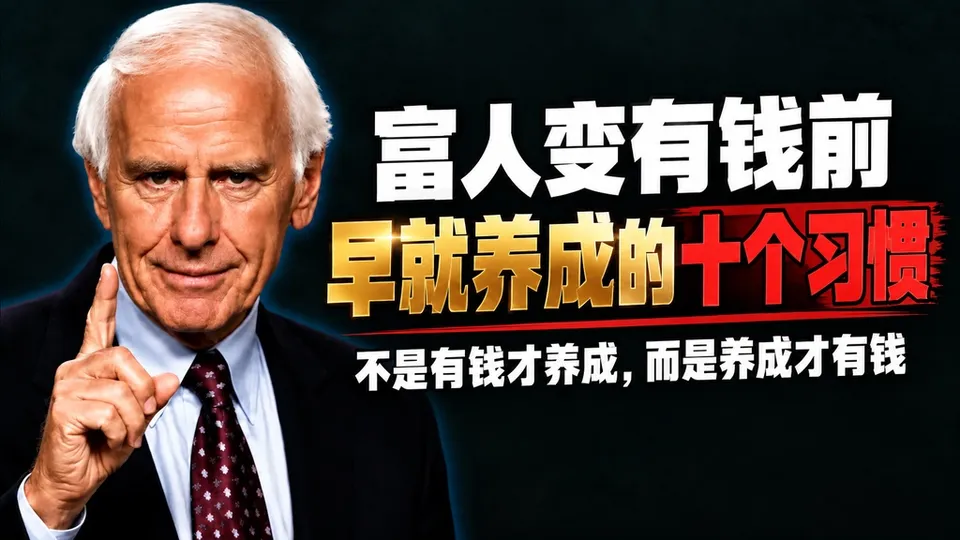
It's backward. Almost entirely backward. And believing it backward is one of the reasons people stay where they are. Because the truth is the habits came first long before the money.
这是反的。几乎完全是反的。而相信它是反的,正是人们停留在原地不前的其中一个原因。因为事实是,习惯先于金钱很久之前就已形成。
The people who eventually built something were practicing the behaviors of wealth while they were still poor, while they were still ordinary. While there was nothing in their bank account to justify the way they were living, the money didn't create the habits.
那些最终有所成就的人一直在践行富有的行为方式,在他们仍然贫穷的时候,在他们仍然平凡的时候。当他们的银行账户里空空如也,无法为他们生活方式提供依据时,金钱并没有创造这些习惯。
The habits created the money. And that changes everything for you because it means you don't have to wait. You don't have to arrive at some future amount before you're allowed to start behaving like the person you want to become.
习惯创造了金钱。而这会为你改变一切因为这意味着你不必等待。你不必达到某个未来的数额才能开始表现得像你想成为的那个人。
You can start tonight with nothing exactly as you are. Tonight I want to talk about 10 habits wealthy people learned before they had money. Not after before when they were still broke, still uncertain, still surrounded by people who thought they were wasting their time.
今晚你就可以从一无所有、保持真实的自己开始。今晚我想谈谈富人在有钱之前学到的10个习惯。在他们还没有钱的时候。不是之后,而是之前,当他们仍然一贫如洗时,仍然充满不确定,仍然被那些人包围着那些人认为他们在浪费时间。
These are habits you can practice at any income. That's the whole point. None of them require money. All of them build the person who eventually attracts it. Learn these while you have little and you will be ready when you have more.
这些是你在任何收入水平下都可以培养的习惯。这才是关键所在。它们都不需要花钱。所有这些都塑造了最终吸引它的人。趁你拥有的还少时学会这些,你就会准备好当你拥有更多时。
Because here is what nobody tells you. The money will test who you already are. If you build the wrong person first and hand them money, the money leaves. If you build the right person first, the money stays and it multiplies.
因为这是没人告诉你的。金钱会考验你本来是什么样的人。如果你先塑造了错误的人,然后把钱交给他,钱就会离开。如果你先塑造对的人,钱就会留下并不断增值。
The habit is the foundation. The money is just the house you build on top of it. Most people have it exactly reversed. They say when I have money I'll start saving. When I have money I'll start learning.
习惯是基础。金钱只是你在此基础上建造的房子。大多数人完全弄反了。他们说等我有钱了,我就会开始存钱。等我有钱了,我就会开始学习。
When I have money I'll start planning my time carefully. And so they wait. And the waiting itself is the reason the money never comes. You cannot become disciplined with money you don't have yet.
等我有钱了,我就会开始认真规划我的时间。于是他们等待。而等待本身,就是钱永远不来的原因。你无法用还没有的钱变得自律。
You become disciplined with the little you do have. And that discipline is what eventually earns you more. The person who can't manage $5,000 will not suddenly become able to manage 500,000.
你会用你仅有的一点点资源变得自律。而正是这种自律最终为你赢得更多。连5000美元都管理不好的人不会突然就有能力管理50万。
The number changes. The person doesn't unless the person change first. So take these seriously. Every one of them is available to you right now at your current income in your current circumstances.
数字会变。人不会变,除非人先改变。所以认真对待这些。他们中的每一个现在都为你所用以你目前的收入在你目前的情况下。
That's not a limitation. That's the good news. Number one, they learned to spend less than they earned long before there was much to earn. This is the oldest law of wealth and it is the one people most want to skip.
这不是限制。这是好消息。第一,他们学会了在收入丰厚之前就量入为出。早在有很多钱可赚之前。这是最古老的财富法则,也是人们最想跳过的一条。
They believe it applies only to large incomes. It applies to every The person who earns a modest wage and spends a little less than that has learned something. The person who earns a large wage and spends all of it has not.
他们认为这只适用于高收入人群。它适用于每一个赚取微薄工资的人并且花得比那略少的人,已经学到了一些东西。赚取高额工资却全部花光的人,则没有学到。
The first person has learned to create a gap. And the gap is where wealth lives. I once knew a young man who earned very little. He worked long hours for wages that barely covered his life.
第一种人已经学会了创造差距。而差距正是财富所在之处。我曾认识一个收入微薄的年轻人。他长时间工作,挣的工资仅够勉强维持生活。
And out of every dollar he made, he set aside a small portion. Not a large portion. He couldn't afford a large portion, but he set aside every single time he was paid without exception.
他从赚到的每一美元中,都留出一小部分。不是一大部分。他负担不起一大部分,但每次拿到报酬时,他都会留出一部分,无一例外。
People around him thought it was pointless. What difference could a few dollars make? He was too poor to save. They told him saving was for people who had extra. He didn't have extra, but he saved anyway.
他周围的人认为这毫无意义。几块钱能有什么用?他太穷了,根本存不下钱。他们告诉他,储蓄是有余钱的人的事。他没有余钱,但他还是存了钱。
You see, he wasn't saving for the amount. He was saving for the habit. He understood even then that the muscle you build handling a small gap is the same muscle you'll need to handle a large one.
你看,他存钱不是为了数额。他当时正在为这个习惯存钱。他那时就明白,你处理小缺口时所锻炼的能力,正是你将来处理大缺口时所需要的同一种能力。
He was training himself on tiny sums to become the kind of person who always keeps a portion. Years later, when his income grew, the habit was already in place. He didn't have to learn it under pressure.
他是在用一笔笔小钱训练自己,以成为那种总会留出一部分的人。多年后,当他的收入增加时,这个习惯已经根深蒂固了。他不必在压力下学习它。
He'd learned it when the stakes were nothing. And so as the money came, the gap widened automatically because the behavior was already automatic. The person who waits until they earn more to start saving discovers something painful.
他是在毫无风险的时候学会的。于是随着钱进账,差距自动拉大因为行为早已成为自动的。等到挣得更多才开始储蓄的人会发现一件痛苦的事。
When they earn more, they spend more. The lifestyle expands to swallow the income. And they are just as broke at the higher number as they were at the lower one because they never built the gap.
当他们挣得更多时,他们花得也更多。生活方式膨胀,吞噬了收入。他们在更高的收入下依然一贫如洗,就像他们在更低的收入时一样,因为他们从未建立起差距。
They only built the appetite. Start now with whatever you have. If it's a small amount, save a small The dollar figure doesn't matter. What matters is that you become today at your current income.
他们只建立起了欲望。现在就用你拥有的一切开始。如果金额很小,就存一小笔。金额多少并不重要。重要的是,你要在今天就以当前的收入开始行动。
A person who always keeps a portion. That person is who eventually gets wealthy. Not the person who is waiting for permission to begin. Number two, they learned to value time the way most people value money.
总是保留一部分的人。那个人最终会变得富有。而不是那个等待许可才开始的人。第二,他们学会了像大多数人珍视金钱一样珍视时间。
Long before they had anything worth protecting financially, they were fiercely protective of their hours. Most people guard their money and waste their time. They will drive across town to save a few dollars, then throw away an entire afternoon on nothing at all.
早在他们有任何值得在财务上保护的东西之前,他们就极力保护自己的时间。大多数人守护自己的金钱,却浪费自己的时间。他们会开车穿过整个城市就为了省几块钱,然后把整个下午白白浪费掉。
They treat money as scarce and time is endless. But time is the truly scarce thing. And the people who eventually got wealthy understood that early. Here's what I've learned. The way you spend an ordinary hour when nobody is watching and nothing is required tells you who you are becoming.
他们把钱当作稀缺资源,把时间当作无穷无尽。但时间才是真正稀缺的东西。而那些最终变得富有的人很早就明白了这一点。以下是我学到的东西。你度过平凡一小时的方式在无人注视、无事可做的时候,会告诉你你正在成为谁。
The person who fills their empty hours with learning, with building, with preparation is becoming somebody. The person who lets those hours dissolve into nothing is becoming nobody in particular.
用学习填补空闲时间的人,用建设、用准备来填补的人,正在成为某个了不起的人。任由那些时间消融于虚无的人正在成为一个无足轻重的人。
And it doesn't cost a single dollar to spend an hour well instead of poorly. That's the point. This habit is completely free. The poorest person and the richest person both receive the same 24 hours.
而这不花费一分钱就能让一小时过得充实而非虚度。这就是关键所在。这个习惯完全免费。最贫穷的人和最富有的人都同样拥有24小时。
The difference is entirely in what they decide those hours are worth. I knew a woman once who had almost no money but treated her time as if it were made of gold. In the hours after her work was done, when everyone else was resting, she was studying, reading, learning a skill that had nothing to do with her current job, preparing for a life she didn't have People asked her why she bothered.
区别完全在于他们如何决定那些时间价值几何。我曾认识一位几乎没什么钱的女士却把自己的时间视若黄金。在她完成工作后的几个小时里,当其他人都在休息时,她在学习,阅读,学习一项技能与她当前的工作毫无关系,为她尚未拥有的生活做准备人们问她为什么要这么费心。
She was exhausted. She could have rested, but she decided that her free hours were the only raw material she had. and she was not going to waste the one asset that was actually hers.
她已经精疲力竭。她本可以休息,但她认定,她的空闲时间是她仅有的原材料。她不打算浪费这唯一真正属于她的资产。
That woman built a life most people would envy. And when you ask how, they point to the money. But the money came from the skill. And the skill came from those protected hours before there was any payoff at all.
这个女人打造了大多数人都会羡慕的生活。当你问怎么做时,他们指向金钱。但金钱来自技能。而技能来自那些受保护的时光,在任何回报出现之前。
She was rich in her use of time long before she was rich in anything else. You can begin this tonight. Look at the hours you throw away without noticing. the ones that leave no trace.
她在利用时间上很富有,很久之前她在其他任何方面都很富有。你今晚就可以开始这样做。看看那些你在不经意间丢弃的时间。那些不留痕迹的时间。
Take even one of them back and put it toward becoming who you want to be. That single reclaimed hour repeated is worth more than any raise you're waiting for. Number three, they learn to keep their word on small things when it would have been easy to break it.
哪怕只收回其中一小时,把它用在成为你想成为的人上。那重新夺回的一小时,日复一日,比任何加薪都更有价值,而你还在等待。第三,他们学会在小事上信守承诺即使违背承诺本是轻而易举。
Long before anyone was watching, before there was a reputation to protect, they were building a reputation with themselves. Because wealth, real wealth, is built on trust. People do business with people they can rely on.
早在无人注视之时,在尚无声誉需要维护之前,他们就在与自己建立信誉。因为财富,真正的财富,建立在信任之上。人们会与可以信赖的人做生意。
And you do not become reliable on the day the big opportunity arrives. You become reliable in a thousand small moments nobody remembers. where you did what you said you would do even though it cost you something and nobody would have known if you hadn't.
而你不会在重大机遇降临的那一天才变得可靠。你在无数无人铭记的微小瞬间中变得可靠。你做到了你说过要做的事,即使这会让你付出代价,而且如果你没做到也不会有人知道。
Look, the person who breaks small promises becomes the person who breaks large ones. It's the same person. The scale of the promise changes, but the character behind it doesn't. If you cannot be trusted with a small commitment, no one will ever hand you a large one.
你看,违背小承诺的人就会变成违背大承诺的人。这是同一个人。承诺的规模会改变,但背后的品格不会变。如果你连小承诺都无法让人信任,就永远不会有人把大承诺交给你。
And the large ones are where the money is. Most people don't take small promises seriously. They agree to things casually and forget them just as casually. They're late without thinking.
而大承诺才是金钱所在。大多数人不把小承诺当回事。他们随口答应事情,也同样随口就忘。他们迟到时想都不想。
They cancel without wait. They say they'll do a thing and then they simply don't. And they assume it doesn't matter because it was small. But it does matter. Not because of the one broken promise.
他们毫不犹豫地取消。他们说要做什么,然后就干脆不做了。而且他们认为这没什么关系,因为事情很小。但这确实重要。不是因为那一个违背的承诺。
Because of the person it builds. Every broken word teaches your own brain that your word means nothing. And once your word means nothing to you, it will eventually mean nothing to everyone else.
而是因为它所塑造的人。每一个违背的诺言都在教你的大脑你的话毫无意义。一旦你的话对你自己毫无意义,最终它对其他人也会毫无意义。
The people who got wealthy were early on absurdly reliable about small things. They showed up when they said they would. They finished what they started. They returned what they borrowed.
那些变得富有的人在早期就对小事有着极其可靠的表现。他们说会来就真的来了。他们完成了自己开始做的事。他们归还了借来的东西。
They did the unglamorous thing they committed to even when it was inconvenient. And over years, this built a reputation that money later followed. This costs nothing. You can start being a person of your word tonight at any income with any circumstance.
他们做了不起眼的事,甚至为此承诺即使在不方便的时候。多年以后,这建立了声誉,金钱随后而来。这不费分文。你今晚就可以开始做一个信守承诺的人,在任何收入,在任何情况下。
The next time you make even the smallest commitment, treat it as sacred. Do the thing. Keep the word. Not for the other person, though it helps them. For the person you are building inside yourself.
下一次你做出哪怕是最小的承诺时,都要把它视为神圣的。去做那件事。记住这个词。不是为了别人,尽管这对他们有帮助。而是为了你内心正在塑造的那个人。
Number four, they learn to invest in themselves before they could afford to invest in anything else. The first investment wealthy people make is never in a stock or a business. It's in their own capability.
第四,他们学会投资自己在他们有能力投资其他任何东西之前。富人的第一笔投资从来不是股票或生意。而是他们自身的能力。
And they make it long before they have money to spare. Because the highest return you will ever earn is on the money and time you put into becoming more valuable. A person who is worth more gets paid more.
而且他们在还有余钱之前就早早开始了。因为你能获得的最高回报,就来自于你投入的金钱和时间,用来让自己变得更有价值。价值更高的人,得到的报酬也更高。
That's not a mystery. That's the whole game. And you can increase your value at any income because knowledge and skill are available to the poor and the rich on nearly equal terms.
这不是什么谜团。这就是全部关键所在。而且无论收入多少,你都可以提升自己的价值,因为知识和技能对穷人是可及的,对富人而言也几乎条件均等。
I knew a young man who had almost nothing, but who spent what little he had on books, not entertainment, not comfort. Books that taught him things he didn't know. He read them not to pass the time, but to become someone.
我认识一个几乎一无所有的年轻人,但他把仅有的一点钱都花在了书上,不是娱乐,也不是安逸。那些书教给他他不知道的东西。他读书不是为了消磨时间,而是为了成为更好的人。
And when his money was truly gone, he borrowed the books instead. because the learning was not going to stop for lack of funds. People thought this was strange. Why spend your scarce dollars on ideas when you could spend them on things?
当他的钱真的花光时,他转而借书来读。因为学习不会因缺钱而停止。人们觉得这很奇怪。为什么要把你稀缺的金钱花在思想上当你可以把它们花在物质上时?
Because things depreciate and ideas compound. He understood that the person he was becoming through those books would eventually earn far more than the small comforts he was giving up.
因为物质会贬值,而思想会增值。他明白,他正在成为的那个人通过那些书最终会赚到远比他所放弃的那些小小舒适更多的东西。
Here's the truth. Most people stop learning the moment their formal schooling ends. They close the book on their own development and spend the next 50 years running on what they knew at 20.
事实是这样的。大多数人停止学习就在他们正规学校教育结束的那一刻。他们合上了自我发展的书本并在接下来的50年里,依靠他们20岁时所知道的东西过活。
And then they wonder why their income never grows. It never grows because they never grew. The wealthy learn differently. They treated their own education as a lifelong project that no institution was responsible for except themselves.
然后他们纳闷为什么自己的收入从不增长。它从不增长,因为他们从未成长。富人的学习方式不同。他们把自己的教育视为一项终身事业除了他们自己,没有任何机构对此负责。
They read. They studied. They sought out people who knew more than they did. They asked questions and were not ashamed to not know. This habit is nearly free. You can begin it tonight with a single book you don't yet understand.
他们阅读。他们学习。他们寻找比他们懂得更多的人。他们提出问题,并不以不知道为耻。这个习惯几乎不需要成本。你今晚就可以开始从一本你尚未理解的书开始。
You can begin it by spending one hour learning something that makes you more useful to the world. The world pays for usefulness. And you can begin building your usefulness right now, no matter how little you have.
你可以花一小时学点东西来开始让自己对世界更有用。世界会为有用之处买单。而你可以立刻开始构建你的价值,无论你拥有的多么微薄。
Number five, they learned to think in years while everyone around them thought in days. Long before they had wealth, they had patience. And the patience was itself a form of wealth that the impatient people never developed.
第五,他们学会以年为单位思考而周围的人却以天为单位思考。早在拥有财富之前,他们就已经拥有了耐心。而耐心本身就是一种财富那些没有耐心的人永远无法培养出的财富。
Most people want the result now. They plant a seed and dig it up a week later to see if it's growing. They start a thing and abandon it before it has any chance to mature. They measure their progress in days and get discouraged because almost nothing worth having shows meaningful progress in days.
大多数人都想立刻得到结果。他们种下一颗种子,一周后把它挖出来看看它是否在生长。他们开始一件事然后放弃它在它有机会成熟之前。他们以天来衡量自己的进步并因此感到气馁,因为几乎所有值得拥有的东西都不会在几天内显示出有意义的进展。
The wealthy learn to measure in years. They understood that the important things grow slowly, invisibly underground for a long time before they break the surface. and they kept working through the long stretch when there was nothing to show because they trusted the timeline even when they couldn't see the result.
富人学会以年来衡量。他们明白,重要的事物总是缓慢生长,在地下 invisible 地酝酿许久,直到破土而出。他们在漫长的岁月里坚持耕耘,哪怕毫无可见的成果,因为他们相信时间的力量,即便看不到结果也依然如此。
I once knew a man who worked at something for 7 years before it produced anything real. 7 years. His friends thought he was a fool. They'd tried things, too, but they'd quit after a few months when the reward didn't come fast enough.
我曾认识一个人,他为一件事努力了7年,才终于有了真正的成果。7年。他的朋友们认为他是个大聪明。他们也尝试过一些事情,但几个月后就放弃了,因为回报来得不够快。
They kept starting over and starting over and ending up nowhere. He didn't start over. He stayed. He put in the year and then the next year and then the next. And somewhere in that seventh year, the thing he'd been building finally began to pay.
他们一次又一次地重新开始最终却毫无进展。他没有重新开始。他留了下来。他投入了一年,然后又是一年,接着又是一年。到了第七年的某个时候,他一直在构建的东西终于开始有了回报。
Not because year seven was magic, but because 7 years of steady effort had finally accumulated into something the world would pay for. His friends called it a sudden success. It was not sudden.
不是因为第七年有什么魔力,而是因为七年的持续努力终于积累成了世界愿意为之付出的东西。他的朋友们称之为一夜成名。这并非一夜之间。
It was seven years slow. They just hadn't been watching during the years when it looked like You see, thinking in years costs nothing. It's a way of seeing, not a purchase. You can adopt it tonight.
这是七年的缓慢积累。只是这些年他们一直没有留意当它看起来像 你看,以年为单位思考不费分文。这是一种看待方式,而非购买。你今晚就可以采用它。
The next time you start something worthwhile, decide in advance that you will give it years, not weeks. Decide that you will not judge it by the first season. That decision made before you begin is what separates the people who finish from the people who quit right before the harvest.
下次你开始做一件值得做的事时,提前决定你会为此投入数年时间,而不是几周。决定你不会用第一个阶段来评判它。在开始之前做出的这个决定,正是区分那些能坚持到底的人与那些在收获前夕放弃的人的关键。
Number six, they learned to surround themselves with people who lifted them and to walk away from people who pulled them down. And they did this while they were still poor when it would have been much easier to just stay comfortable among people who expected nothing of them.
第六点,他们学会了让自己身边围绕着那些能提升他们的人,并远离那些会拖累他们的人。而且他们在仍然贫穷的时候就做到了这一点那时候,本来更容易安逸地待在那些对他们毫无期待的人中间。
Because you become like the people you spend your time with. Their standards become your standards. Their ambitions become the ceiling of your own. Their way of talking about money, about work, about the future seeps into you whether you want it to or not.
因为你会变得像你花时间相处的人一样。他们的标准成为你的标准。他们的抱负成为你自己的上限。他们谈论金钱的方式,关于工作、关于未来的方式渗透进你,无论你是否愿意。
And if you spend your life among people who have given up, you will find giving up easier and easier.
如果你一生都与那些已经放弃的人为伍,你会发现放弃变得越来越容易。
This is one of the hardest habits because it involves people you love. The wealthy learned early to be careful about whose thinking they absorbed. Not to abandon the people they cared about, but to be honest about which conversations lifted them and which ones dragged them back into smallness.
这是最难改变的习惯之一因为它涉及你所爱的人。富人们很早就学会了要谨慎对待自己吸收了谁的思维方式。不是要抛弃他们关心的人,而是要诚实地面对哪些对话让他们振奋哪些又把他们拖回渺小之中。
I knew a woman who came from a family that believed people like them didn't get ead. It wasn't cruelty. It was just the water they swam in. Every time she reached for something more, someone she loved would tell her gently not to get her hopes up, to be realistic, to stay where she belonged.
我认识一位女士,她来自一个家庭,那个家庭认为像他们这样的人不会得到好结果。这并非残忍。那不过是它们赖以游弋的水。每当她想要追求更多,她所爱的人总会告诉她,温和地劝她不要抱太大希望,要现实一点,待在属于她的地方。
She loved them. But she understood that if she stayed inside their expectations, she would live inside their limits. So she began to seek out different company, people who were building, people who believed the future was something you could shape rather than something that happened to you.
她爱他们。但她明白如果她留在他们的期望里,她就会活在他们的局限之中。于是她开始寻找不同的同伴,那些在建设的人,那些相信未来是可以被塑造的,而不是发生在你身上的事。
She spent her time whenever she could near people who were becoming what she wanted to become. She didn't have money for this. She simply chose her company differently. She read the words of people she'd never meet.
她一有机会就花时间待在那些人身边,那些正在成为她想成为的人的人。她没有钱做这个。她只是选择了不同的公司。她读着那些她永远不会遇见的人的文字。
She sat near the ambitious ones and listened. She slowly moved her mind into a room full of people who expected more until she began to expect more, too. You can start this tonight at no cost.
她坐在那些雄心勃勃的人旁边,倾听着。她慢慢地将思绪移入一个满是人的房间那些人期望更多直到她也开始期望更多,也。你今晚就可以零成本开始。
Look honestly at who shapes your thinking. Notice which voices make your dreams feel possible and which ones make them feel foolish. Move quietly and without drama toward the ones who lift you.
诚实地审视是谁在塑造你的思维。留意哪些声音让你的梦想显得可行而哪些声音让你的梦想显得愚蠢。安静而不张扬地走向那些激励你的人。
Your future income is more connected to this than you would ever guess. Number seven, they learn to take full responsibility for their situation long before their situation was anything worth being proud of.
你未来的收入与此的关联比你想象的要大得多。第七点,他们学会为自己的处境承担全部责任早在他们的处境有任何值得骄傲之处以前。
And this may be the habit that changes a person the most because everything downstream of it depends on it. Most people when their life isn't what they want look outward for the reason.
而这可能是最能改变一个人的习惯因为它下游的一切都依赖于它。大多数人在生活不如己意时会向外寻找原因。
The economy, their upbringing, their bad luck, the people who wronged them, the circumstances that were stacked against them. And every one of those reasons might be partly true. But true or not, focusing on them keeps you helpless.
经济环境、他们的成长经历、他们的坏运气、那些亏待过他们的人、那些对他们不利的境况。而这些原因中的每一个,可能都有几分道理。但无论真假,专注于它们只会让你感到无助。
Because if the reason for your situation is out there, then the solution is out there, too, in someone else's hands. and there's nothing you can do but wait for the world to change.
因为如果你处境的原因在外面,那么解决方案也在外面,同样,在别人的手中。而你除了等待世界改变之外,无能为力。
But if you take responsibility even for a situation that wasn't entirely your fault, then the power to change it comes back into your own hands. And that is the only place from which you can actually do anything.
但如果你承担责任即使某个情况并不完全是你的错,那么改变它的力量就会回到你自己手中。而那是唯一的地方你真正能做出任何行动的地方。
The wealthy learned this while they were still down. They didn't wait until they were successful to feel responsible. They took ownership of their lives while their lives were still a mess.
富人在他们还没成功时就明白了这一点。他们没有等到成功之后才感到负有责任。他们掌控了自己的人生即便当时他们的人生仍一团糟。
precisely because ownership was the only way out of the mess. I once knew a man who had every reason to blame. His circumstances truly had been hard. Anyone would have understood if he'd spent his life pointing at the reasons he hadn't gotten ead.
恰恰因为掌控是走出混乱的唯一出路。我曾认识一个人,他完全有理由去指责。他的处境确实一直很艰难。如果他一生都在指着那些他没得到ead的理由,谁都能理解。
And for a while, he did exactly that. He had a complete and accurate list of everything that had been done to him. And that list kept him stuck for years. It was true and it was useless because as long as the cause of his life was other people, the fixing of his life was also up to other people and they were never going to come fix it.
有一段时间,他正是这么做的。他有一份完整而准确的清单,上面记录了所有别人对他做过的事。那份清单让他困在其中多年。这是真的,但毫无用处因为只要他生活的根源在于别人,他生活的修复也取决于别人而他们永远不会来修复它。
The day he changed was the day he set the list down. Not because the list was false, because carrying it was costing him his future. He decided that whatever had happened, the response was now his.
他改变的那天,就是他放下清单的那天。不是因为清单是假的,而是因为背负着它,他正在失去自己的未来。他决定,无论发生了什么,应对方式现在都由他掌控。
What he did next was his to choose. And the moment he took that responsibility, he stopped being a victim of his story and became the author of it. This habit costs nothing. It's a shift inside your own head.
接下来做什么由他自己选择。而当他承担起这份责任的那一刻,他不再是自己故事中的受害者,而成为了它的作者。这个习惯不花一分钱。这是你头脑内部的一种转变。
You can make it tonight. Stop rehearsing the list of reasons your life is what it is. Not because they're untrue, but because they're not useful. Ask instead what your move is. Now that question puts the power back in the only hands that can use it.
你今晚就可以做到。别再反复排练你生活为何如此的种种理由。不是因为它们不真实,而是因为它们没有用。不如问问自己,你的下一步行动是什么。现在这个问题把权力交还给唯一能够使用它的手中。
Yours. Number eight. They learned to give before they had anything to spare. This one surprises people because they assume generosity comes after abundance. That you give when you have extra.
你的手中。第八名。他们在自己都所剩无几之前就学会了给予。这一点让人们感到意外因为他们以为慷慨是在富足之后才有的。你会在有了多余的时候才给予。
But the wealthy learned to give while they still had little. And the giving itself was part of what changed them. Because a person who gives even a little out of scarcity is training themselves to live from a place of abundance rather than fear.
但富人在他们仍然拥有很少的时候就学会了给予。而给予本身正是改变他们的一部分原因。因为一个在匮乏中仍愿意给予哪怕一点点的人正在训练自己从丰盛而非恐惧的状态中生活。
The poor person who hoards every crumb out of terror stays trapped in the mind of scarcity. The poor person who gives a small amount freely is practicing the mind of someone who has enough.
因为恐惧而囤积每一粒碎屑的穷人会一直被困在匮乏的心态中。能够自由地给予少许的穷人正在练习一个内心富足之人的心态。
The mind comes before the money. I knew a young woman who had barely enough for herself and yet she always found a small amount to give to help someone worse off to contribute to something larger than herself.
心态先于金钱。我认识一位年轻女子,她自己的钱勉强够用但她总能省出一点点去帮助境况更差的人去为比自己更宏大的事业贡献一份力量。
People told her she couldn't afford it and and in strict arithmetic they were right. She couldn't afford it. She gave anyway. What she was building was not measured in the small sums she gave away.
人们说她负担不起严格按算术来说,他们说得没错。她确实负担不起。她依然给予了。她所建立的,并不是以她捐出的那些小额款项来衡量的。
She was building an identity as a person who contributes, a person whose life flows outward rather than clenching inward. And that identity over time made her the kind of person others wanted to work with help and reward.
她正在建立一种身份,一个乐于贡献的人,一个生命向外流淌的人,而非向内紧攥的人。而这种长期一致的身份认同使她成为别人愿意与之共事、提供帮助和给予回报的那种人。
Now, this isn't a promise that giving mechanically returns money. It's deeper than that. Giving while poor changes your relationship with money itself. It tells your own mind that money is a thing that moves, that circulates, that you can be a channel for rather than a desperate holder of.
这并非承诺付出就一定会机械地换来金钱。它比这更深刻。在贫穷时给予会改变你与金钱本身的关系。与金钱本身。它告诉你的内心,金钱是一种流动的东西,一种循环的东西,你可以成为它的通道,而不是绝望的持有者。
And that relationship is the one that eventually lets wealth flow to you and through you without fear. The person who cannot give when poor usually cannot give when rich either. They just have more to hoard.
而正是这种关系,最终让财富流向你并穿过你,而无需恐惧。贫穷时无法给予的人,通常也无法在富有时给予。他们只是有更多东西可以囤积。
The number grows and the clenching grows with it. But the person who learned to give freely with little gives even more freely with much and their whole life is larger for it. You can begin tonight with something small.
数字增长,紧握的拳头也随之攥得更紧。但学会了慷慨给予的人即使拥有不多,也会更加慷慨地付出更多,他们的人生也因此更加广阔。今晚你可以从一件小事开始。
Time if not money, help if not cash. The amount is not the point. The point is to practice right now. Being a person whose hands are open rather than closed. That openness is a feature of nearly everyone who eventually builds something worth having.
没时间就出钱,没钱就出力。金额不是重点。重点是现在就去练习。做一个双手张开而非紧握的人。这种开放心态是几乎每个最终创造出有价值之物的人的特质。最终创造出值得拥有的东西的人。
Number nine, they learned to stay calm when things went wrong long before they had large things to lose. Because the people who build wealth face setbacks constantly. And the ones who survive are not the ones who avoid trouble.
第九,他们学会了保持冷静,当事情出错时,早在他们有大量东西可失去之前。因为创造财富的人会不断面临挫折。而生存下来的,并不是那些躲避麻烦的人。
They're the ones who don't fall apart when trouble comes. Most people, when something goes wrong, react. They panic. They make a rush decision to escape the discomfort. They let a small problem become a large one because they couldn't sit with the fear long enough to think clearly.
而是那些在麻烦来临时不会崩溃的人。大多数人,当出了问题时,会做出反应。他们惊慌失措。他们仓促决定,想要逃离这种不适感。他们让小问题演变成了大问题因为他们无法与恐惧共处足够长的时间来清晰地思考。
And in money, in business, in life, the panicked decision is almost always the wrong one. The wealthy learned emotional steadiness while the stakes were still small. When a minor thing went wrong, they practiced not overreacting.
在金钱上,在商业中,在生活中,恐慌之下做出的决定几乎总是错误的。富人在赌注还小的时候就学会了情绪稳定。当小事出错时,他们练习不过度反应。
They practiced pausing before responding. They practiced separating the feeling of the setback from the decision the setback required. And by the time large things went wrong, as they always eventually do, the steadiness was already built.
他们练习在回应前先暂停。他们练习将挫折感与决定分开那是挫折所要求的。等到大事出错时,它们终究总会出错,那份平稳早已建立。
I knew a man who lost a great deal once, more than most people ever have. And what struck everyone who watched was how calm he remained. Not because he didn't care. He cared enormously.
我认识一个人,他曾失去过很多,比大多数人失去的都要多。而所有目睹这一切的人,都为之震撼的是他竟如此镇定。并非因为他不在乎。他非常在乎。
But he'd learned over many small losses across many years that panic solves nothing. And clear thinking solves almost everything. So when the large loss came, he did not flail. He assessed.
但多年来,在经历了无数次小小的失去之后,他明白了恐慌解决不了任何问题。而清晰的思考几乎能解决一切。所以当巨大损失来临时,他没有慌乱。他进行了评估。
He decided, he rebuilt.
他做出决定,他重建了。
And he rebuilt precisely because he didn't destroy himself in the first hours after the loss. The people around him who suffered similar losses often made everything worse in their panic.
而他之所以能重建,正是因为他没有在失去后的最初几个小时里毁掉自己。他身边那些遭受类似损失的人往往在恐慌中把一切弄得更糟。
They sold at the bottom. They quit at the wrong moment. They let the fear make the decisions that should have been made by the mind. This calm is a skill. And like any skill, it's built through practice.
他们在底部卖出了。他们在错误的时刻放弃。他们让恐惧替自己做决定而这些决定本应由理智做出。这种平静是一种能力。就像任何技能一样,它是通过练习建立起来的。
And the practice is free and available every single day because small things go wrong every single day. Each one is a rehearsal. Each time you choose to pause instead of panic, you strengthen the muscle you'll need when the large thing comes.
而且这种练习是免费的,每天都可以进行因为每天都会有小事出错。每一次都是一次排练。每次你选择暂停而不是惊慌,你都在强化你需要的那块肌肉,当大事来临时。
Start now with the next small frustration that finds you. Instead of reacting, pause, breathe, ask what the situation actually requires. Practice steadiness on the little disasters so that steadiness is who you are when a real one arrives.
从现在开始,面对下一个找上你的小挫折。不要条件反射,暂停,呼吸,问问情况实际需要什么。在小灾难中练习沉稳这样当真正的灾难来临时,沉稳就是你的本色。
The composed person keeps what the panicked person loses. Number 10. They learned to believe it was possible for them specifically before there was any evidence that it was. And this is perhaps the deepest habit of all because it's the soil the others grow in.
镇定的人守住了慌乱的人所失去的。第十条。他们学会了相信这是可能的特别是对他们而言在任何证据表明它可能之前而这或许是所有习惯中最深层的因为它是其他习惯生长的土壤。
Most people who never build anything don't fail because of what they did. They fail because of what they believed. Deep down in a place they rarely examine, they believe that wealth, success, a larger life was for other people, not for them.
大多数从未有所建树的人并非失败因为他们所做的事。他们失败是因为他们所相信的东西。在内心深处一个他们很少审视的地方,他们相信财富、成功、更广阔的人生是属于别人的,不是属于他们的。
Other kinds of people got those things. People from different families with different luck, different gifts, not people like them. And so they never really tried. Not with their whole self.
那些东西是其他类型的人得到的。来自不同家庭的人,有着不同的运气,不同的天赋,而不是像他们那样的人。所以他们从未真正尝试过。没有全身心投入。
They held back because some part of them had already decided the effort was pointless. Why sacrifice? Why discipline yourself? Why endure the hard years if the good outcome was reserved for others from the start?
他们退缩,是因为他们内心的某一部分早已认定这努力毫无意义。为什么要牺牲?为什么要约束自己?为什么要忍受艰难的岁月如果美好的结果注定属于他人从一开始就是如此?
The belief killed the effort before the effort could begin. The wealthy learned early to believe it was possible for them. Not arrogantly, not with certainty, but with enough belief to justify the effort.
这种信念在努力开始之前就扼杀了努力。富人很早就学会了相信这对他们来说是可能的。不是傲慢地,不是确信地,而是带着足以证明付出合理的信念。
They looked at people who had built lives they admired and thought, "Not that's not for me." But if a human being did that, then a human being can do that. And I am a human being. Here's the truth.
他们看着那些建立了自己钦佩的生活的人然后想,“不,那不适合我。”但如果一个人做到了,那么一个人就能做到。而我是一个人。事实是这样的。
Almost no one who succeeded had proof they would before they did. The proof comes after. It cannot come before by definition. Because before you've done a thing, there's no evidence you can.
几乎所有成功的人在成功之前都没有证据证明他们会成功。证据是在之后才出现的。从定义上讲,它不可能先于行动而来。因为在你完成一件事之前,没有证据表明你能做到。
So, everyone who ever built anything had to believe in the absence of proof. They had to extend themselves credit that reality hadn't yet earned. I knew a young man once who came from nothing and had no reason at all to believe he'd amount to anything.
所以,每一个曾经创造过什么的人,都不得不在没有证据的情况下选择相信。他们不得不预支信用而现实尚未赢得这种信用。我曾认识一个一无所有的年轻人他完全没有理由相信自己会有所成就。
Everyone around him confirmed it. And yet somewhere inside him, he decided without evidence that his life could be more. He couldn't have told you why he believed it. But that belief made him willing to do the work that eventually made it true.
他周围的每个人都证实了这一点。然而在他内心深处,他毫无根据地认定,他的人生可以更加精彩。他说不清自己为何会如此相信。但正是这份信念,让他愿意付出努力,最终让这一切成为了现实。
The belief came first, the results came second. And the results once they arrived made the belief look obvious in hindsight. But at the start, when he chose to believe, it looked foolish.
信念在先,结果在后。而结果一旦到来便让那信念在事后看来显而易见。但一开始,当他选择去相信时,那看起来是愚蠢的。
It always looks foolish at the start. That's why so few people do it. This costs nothing. It's a choice you make inside your own mind tonight without spending a dollar. Choose to believe that the larger life is available to you specifically, even though you don't yet have proof.
一开始总是显得很愚蠢。这就是为什么很少有人这么做。这不需要任何成本。这是你今晚在自己脑海中做出的选择无需花费一分钱。选择相信更广阔的人生是专门为你准备的,即使你还没有证据。
That belief is not a guarantee, but its absence is very nearly a guarantee of the opposite. So, here is what I want you to carry with you. 10 habits. Every one of them learned before the money came.
这种信念并不是一种保证,但若缺乏这种信念,几乎就等于保证了相反的结果。所以,这就是我希望你们随身携带的。10个习惯。每一个都是在财富到来之前养成的。
Spend less than you earn. Guard your time like gold. Keep your word on small things. Invest in your own capability. Think in years. Choose the company that lifts you. Take full responsibility.
花的要比挣的少。像守护黄金一样守护你的时间。在小事上也要信守承诺。投资于自身能力。以年为单位思考。选择能提升你的公司。承担全部责任。
Give from scarcity. Stay calm when things go wrong. And believe it's possible for you before there's any proof. Notice what every one of these has in common. Not a single one requires money.
在匮乏时给予。事情出错时保持冷静。并在没有任何证据之前就相信这对你来说是可能的。注意这些例子有哪些共同点。没有一个需要钱。
Not one. You can begin all 10 tonight at your current income in your current circumstances exactly as you are. That's not a consolation. That's the entire secret. Because the money was never the starting point.
一个都没有。你今晚就可以开始全部10个以你目前的收入,在你目前的情况下,就按你现在的样子。那不是安慰。这就是全部的秘密。因为金钱从来都不是起点。
The money was the result. It came to people who had already become through years of quiet practice the kind of person that money is drawn to and stays with. They built the container first and then the water came and the container was ready to hold it.
金钱只是结果。它降临在那些已经通过多年静心修炼成为金钱所吸引并愿意与之相伴的那种人身上。他们先建好了容器,然后水才到来,而容器已准备好承载它。
Most people do the opposite. They wait for the water before they build the container. And so when a little water does come their way, it runs straight through their hands because there was nothing built to hold it.
大多数人却反其道而行之。他们等到有了水才去建造容器。所以当一点点水来到他们身边时,它就直接从他们手中流走了,因为没有建造任何东西来盛住它。
and they conclude that wealth just isn't for them, never seeing that they simply had the order reversed. You don't have to wait. You must not wait. The waiting is the trap. Everything you need to start becoming a wealthy person in the truest sense of that word is available to you at this exact moment with nothing in your account.
于是他们得出结论,财富就是与他们无缘,却从未看出,他们只是把顺序弄反了。你不必等待。你绝不能等待。等待才是陷阱。你需要的一切,让你开始成为一个富有的人从最真实的意义上说,这个词对你来说是可行的就在此刻,你的账户里一无所有。
Pick three of these habits. Just three. The three you're weakest in. Start practicing them today at your current size, on your current scale. Save a small portion. Keep a small promise.
从这些习惯中挑选三个。就三个。你最不擅长的三项。从今天起,以你当前的尺寸开始练习它们,以你当前的比例。保留一小部分。遵守一个小承诺。
Read one demanding book. It doesn't matter how small the practice is. What matters is that you become starting now the person these habits build. Do that steadily and the person you are in 5 years will be almost unrecognizable to the person sitting here now.
读一本有难度的书。练习有多小并不重要。重要的是,你从现在开始成为这些习惯所塑造的人。稳步坚持下去,5年后的你将会几乎让现在坐在这里的你认不出来。
Not because the habits are magic, but because they build a person. And the person is what everything else follows. The money comes to who you are, not to what you want. So become the person first.
不是因为这些习惯有魔力,而是因为它们塑造了一个人。而人是一切的根本。金钱流向的是你成为什么样的人,而不是你想要什么。所以,先成为那个人。
Build the habits while you have nothing. So that when something comes, you're ready to hold it and grow it and keep it. You must trust that this order is real because it is the order almost every wealthy person follow.
在一无所有时养成习惯。这样当机会来临时,你已准备好去把握它、发展它并守住它。你必须相信这个顺序是真实的,因为这是几乎所有富人都遵循的顺序。
whether they could name it or not. Build the person, then watch the rest arrive.
无论他们能否说出它的名字。先塑造这个人,然后静观其余的一切随之而来。